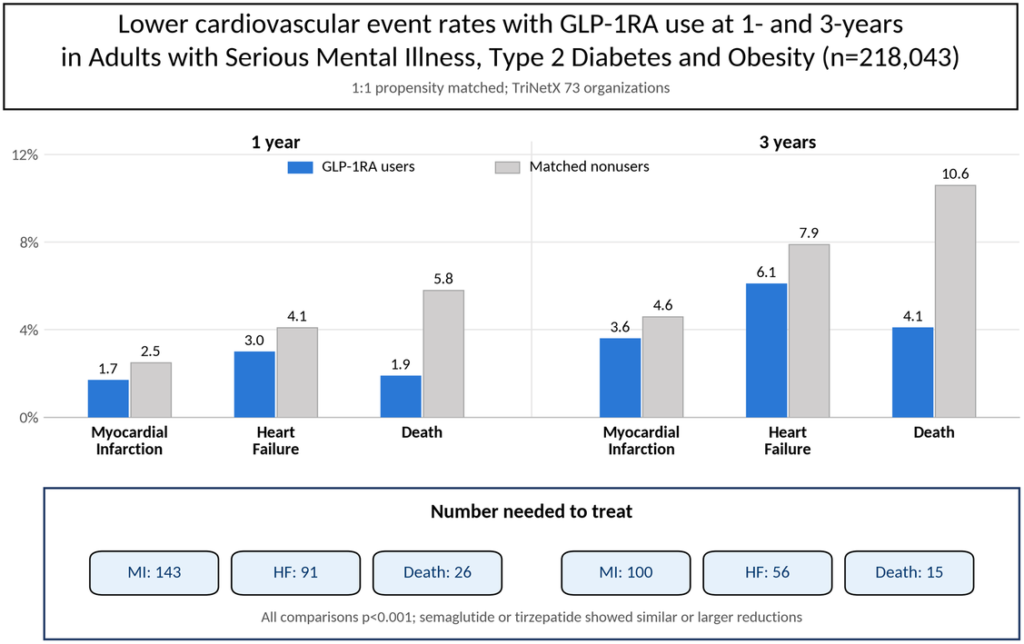
Researchers at WashU Medicine have found that glucagon-like peptide-1 receptor agonists (GLP-1RAs), including semaglutide and tirzepatide, were associated with significantly lower risks of heart attack, heart failure and death among adults with serious mental illness, type 2 diabetes and obesity. The findings, led by senior author Victor G. Dávila-Román, MD, professor of medicine in the cardiovascular division, professor of anesthesiology, and radiology, and director of the WashU Global Health Center, were published in the Journal of the American Heart Association. The study was supported in part by a Spark Funding Convening Grant from Washington University’s Office of the Provost.
People living with serious mental illness face substantially higher rates of cardiovascular disease and often experience reduced life expectancy because of cardiometabolic complications. Analyzing records from more than 218,000 adults across 73 health care organizations, the researchers found that patients using GLP-1 medications had lower rates of incident myocardial infarction, heart failure and all-cause mortality than similar patients who were not taking the drugs. The strongest benefits were observed among users of semaglutide and tirzepatide.
Previous to this study, people with serious mental illness have largely been excluded from major cardiovascular outcomes trials of GLP-1 therapies. According to the authors, this is the first large real-world study to demonstrate an association between GLP-1RA use and reduced cardiovascular events and mortality in this high-risk population.
The research grew from interdisciplinary collaborations fostered through the university’s SPARK Program, which supports new partnerships across schools and disciplines to address complex societal challenges. The investigators said the findings support further study of GLP-1 therapies as a strategy to reduce cardiovascular risk among people with serious mental illness, type 2 diabetes and obesity.