Low testosterone may increase risk of COVID-19 hospitalization for men (Links to an external site)

Among men diagnosed with COVID-19, those with low testosterone levels are more likely to become seriously ill and end up in the hospital than men with normal levels of the hormone, according to a study by researchers at Washington University School of Medicine in St. Louis and Saint Louis University School of Medicine.

The team analyzed the cases of 723 men who tested positive for COVID-19, mostly in 2020 before vaccines were available. The data indicate that low testosterone is an independent risk factor for COVID-19 hospitalization, similar to diabetes, heart disease and chronic lung disease.

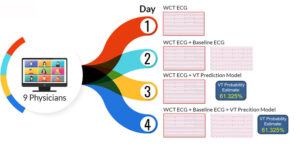
Dr. Stacey Rentschler and Colleagues Receive NIH Grant to Fund Study on Radiation Therapy for VT Patients

Stacey Rentschler, MD, PhD in collaboration with many other Washington University researchers within and outside the cardiovascular division recently received an NIH grant totaling over $3 million to further study a major breakthrough in a non-invasive treatment for ventricular tachycardia. The grant follows a 2021clinical study from Washington University School of Medicine brought together cardiologists, […]

New Clinical Trial for Evoque Valve Comes to Valvular Heart Disease Center

Dr. Alan Zajarias and the team at the Valvular Heart Disease Center have been invited to join the Edwards Triscend 2 pivotal trial, testing the safety and effectiveness of the Evoque valve device in patients with tricuspid regurgitation. The Evoque tricuspid valve replacement system is designed to use an implant to replace the native tricuspid […]

New Drug, Positive Results for Hypertrophic Cardiomyopathy (Links to an external site)

An estimated 1,000,000 people in the U.S. have hypertrophic cardiomyopathy. Washington University interventional cardiologist Richard Bach, MD, FACC, and his team had exhausted non-invasive treatments for a patient suffering from HCM. Until, that is, Bach enrolled the man, who was in his 50s, in a clinical trial evaluating a drug called mavacamten.

Leadership Announcement – DOM Vice Chair of Clinical Research (Links to an external site)

It is my pleasure to announce that Dr. Nancy K. Sweitzer, Professor of Medicine, has joined Washington University School of Medicine as the Vice Chair of Clinical Research for the Department of Medicine and Director of Clinical Research for the Division of Cardiology. Dr. Sweitzer joins us from the University of Arizona in Tucson, where she had been the Chief of Cardiovascular Medicine, Director of the Sarver Heart Center and Co-Director of the Clinical Translational Sciences Graduate Program for the University of Arizona Health Sciences.

Cardiovascular inflammation, heart failure focus of $6 million grant (Links to an external site)

Researchers at Washington University School of Medicine in St. Louis have received a $6 million grant from the National Heart, Lung, and Blood Institute of the National Institutes of Health (NIH) to harness new understandings of the immune system to develop innovative therapies for heart failure and the prevention of organ rejection following heart transplantation.

Winter 2022 WashU Alumni Newsletter (pdf) (Links to an external site)

Winter 2022 WashU Alumni Newsletter thumbnail

Tricuspid Regurgitation – Setting Standards for Diagnosis, Repair & Replacement. The Valve Team at Washington University School of Medicine is among the first in theworld to use a transfemoral transcatheter device for the treatment of severe tricuspidregurgitation (TR).

Diabetes, metabolic syndrome in mice treated with novel class of compounds (Links to an external site)

A study in mice — led by researchers at Washington University School of Medicine in St. Louis — shows that a new class of compounds the scientists developed can improve multiple aspects of metabolic syndrome. An increasingly common group of conditions that often occur together, metabolic syndrome includes type 2 diabetes, high cholesterol, fat buildup in the liver, and excess body fat, especially around the waist. This syndrome often leads to cardiovascular disease, the leading cause of death worldwide.

Popular heart failure drug no better than older drug in sickest patients (Links to an external site)

A new study led by researchers at Washington University School of Medicine in St. Louis suggests that a widely used heart failure drug named sacubitril/valsartan is no better than valsartan alone in patients with severe heart failure. The study also provides evidence that the treatment with valsartan may be slightly safer for patients with advanced heart failure.

Institute for Public Health names new director of the Global Health Center (Links to an external site)

The Institute for Public Health announces the appointment of Victor G. Dávila-Román, MD, as director of its Global Health Center. He was also named vice chair of global health in the Department of Medicine at the School of Medicine. Dávila-Román is professor of medicine in the cardiovascular division of the Department of Medicine, and a professor of anesthesiology and radiology at the School of Medicine. He earned his medical degree from the University of Puerto Rico, and has been affiliated with Washington University since 1986.

Summer 2021 WashU Alumni Newsletter (pdf) (Links to an external site)

Summer 2021 WashU Alumni Newsletter thumbnail

New Cardiovascular Division Chief Named – Sumanth D. Prabhu, MD, an internationally recognized expert in how immunity and inflammation contribute to heart failure, has been named the new Chief of the Cardiovascular Division in the Department of Medicine at Washington University School of Medicine. Upon joining our division on September 1, 2021,Dr. Prabhu also will […]

Research to explore how genes, other factors affect cardiometabolic disease risk (Links to an external site)

Researchers at Washington University School of Medicine in St. Louis have received a four-year, $8.8 million grant to ramp up research aimed at unraveling how an individual’s risks of cardiometabolic diseases, such as heart disease and Type 2 diabetes, are influenced by the interaction of specific genes with demographic and lifestyle factors.

Prabhu named cardiovascular division director (Links to an external site)

Sumanth D. Prabhu, MD, an internationally recognized expert in how immunity and inflammation contribute to heart failure, has been named director of the Cardiovascular Division in the Department of Medicine at Washington University School of Medicine in St. Louis. He also will become cardiologist-in-chief at Barnes-Jewish Hospital and the Tobias and Hortense Lewin Distinguished Professor of Cardiovascular Diseases at the School of Medicine when his appointment begins Sept. 1.

Hammond receives Merck research fellowship (Links to an external site)

J. Gmerice Hammond, MD, a cardiologist and health policy research fellow in the Cardiovascular Division at Washington University School of Medicine in St. Louis, has received a Merck Fellowship Research Award from the Association of Black Cardiologists and the American College of Cardiology.

Scientists find genetic link to clogged arteries (Links to an external site)

High cholesterol is the most commonly understood cause of atherosclerosis, a hardening of the arteries that raises the risk of heart attack and stroke. But now, scientists at Washington University School of Medicine in St. Louis have identified a gene that likely plays a causal role in coronary artery disease independent of cholesterol levels. The gene also likely has roles in related cardiovascular diseases, including high blood pressure and diabetes.

COVID-19 can kill heart muscle cells, interfere with contraction (Links to an external site)

Since early in the pandemic, COVID-19 has been associated with heart problems, including reduced ability to pump blood and abnormal heart rhythms. But it’s been an open question whether these problems are caused by the virus infecting the heart, or an inflammatory response to viral infection elsewhere in the body. Such details have implications for understanding how best to treat coronavirus infections that affect the heart.

Immune therapies for heart disease aim of international research network (Links to an external site)

When a patient arrives in the emergency room with symptoms of a heart attack, doctors’ first priority is to restore blood flow to the heart muscle. Over the past few decades, therapeutic advances aimed at getting blood flowing and reducing strain on the heart have improved patients’ chances of surviving heart attacks to more than 90% from 50%.

Winter 2021 WashU Alumni Newsletter (pdf) (Links to an external site)

Winter 2021 WashU Alumni Newsletter thumbnail

Discoveries & Growth in Center for Cardiovascular Research – A multi-year planned progression and expansion of cardiovascular research within the Cardiovascular Division is paying multiple dividends in terms of nationally recognized discoveries in a broad swathof research areas. “The Center for Cardiovascular Research has been at Washington Universityfor 25 years,” says CCR director Jeanne Nerbonne, […]

Leadership Announcement – DOM Vice Chair for Health Equity (Links to an external site)

It is my pleasure to announce that Angela L. Brown, MD, Professor of Medicine, Division of Cardiology in the Department of Medicine at Washington University School of Medicine has been appointed as Vice Chair for Health Equity for the Department of Medicine. In this new role, Dr. Brown will lead our diversity, equity, inclusion and antiracism activities.

Maddox selected as American College of Cardiology trustee (Links to an external site)

Thomas M. Maddox, MD, a cardiologist and professor of medicine at Washington University School of Medicine in St. Louis, has been selected to serve as a trustee of the American College of Cardiology, an international professional society for cardiovascular care providers. He will serve a three-year term on the board of trustees beginning in April.

Summer 2020 WashU Alumni Newsletter (pdf) (Links to an external site)

Summer 2020 WashU Alumni Newsletter-thumbnail

COVID Response Flexibility, Innovation & Best Practices Highlight Division Response – Even before the first confirmed COVID-19 case was identified in St Louis, teams of hospital and university personnel converged into emergency task forces to re-imagine how patient care would be delivered in the face of a rapidly spreading infectious disease. In the Cardiovascular Division, […]

Winter 2020 WashU Alumni Newsletter (pdf) (Links to an external site)

Winter 2020 WashU Alumni Newsletter-thumbnail

Impacting Health Policy to Improve Outcomes – Cardiologists at Washington UniversitySchool of Medicine are at the forefront of advocating and advancing evidence-basedhealth care policy. “We’re a bit of an anomaly here and also nationally,” says cardiologist Karen Joynt Maddox, MD, MPH. “Most clinicians who focus on health policy and public health are generalists and not […]

High-protein diets boost artery-clogging plaque, mouse study shows (Links to an external site)

High-protein diets may help people lose weight and build muscle, but a new study in mice suggests they have a down side: They lead to more plaque in the arteries. Further, the new research shows that high-protein diets spur unstable plaque — the kind most prone to rupturing and causing blocked arteries. More plaque buildup in the arteries, particularly if it’s unstable, increases the risk of heart attack.

New clues found to help protect heart from damage after heart attack

Studying mice, scientists have shown that boosting the activity of specific immune cells in the heart after a heart attack can protect against developing heart failure, an invariably fatal condition. Patients with heart failure tire easily and become breathless from everyday activities because the heart muscle has lost the ability to pump enough blood to […]

Summer 2019 WashU Alumni Newsletter (pdf) (Links to an external site)

Summer 2019 WashU Alumni Newsletter-thumbnail

A New Era Emerging in CCU Care – The Cardiovascular Division at Washington University School of Medicine has established a new Section of Critical Care Cardiology and is changing how it approaches the care of patients admitted to the coronary care unit. In addition, in collaboration with the Division of Pulmonary and Critical Care Medicine, […]

Safety-Net Hospitals Fare Better Under New Medicare Reimbursement Rules

New Medicare reimbursement rules provide some relief to safety-net hospitals, shifting the burden of financial penalties toward hospitals serving wealthier patient populations, according to a new study led by Washington University School of Medicine in St. Louis. The new rules also reduce the burden of such penalties on hospitals in states that have more generous […]

Obese Mouse Mothers Trigger Heart Problems in Offspring

A diet high in fats and sugars is known for its unhealthy effects on the heart. Scientists now have found that a high-fat, high-sugar diet in mouse mothers before and during pregnancy causes problems in the hearts of their offspring, and that such problems are passed down at least three generations, even if the younger […]

Winter 2019 WashU Alumni Newsletter (pdf) (Links to an external site)

Winter 2019 WashU Alumni Newsletter-thumbnail

New Advanced Heart Failure Center Opens – This month, after more than five years of planning, the Washington University Heart Failure Center opens at Missouri Baptist Medical Center in west St. Louis County. The center is a collaborative effort between heart failurespecialists in the Cardiovascular Division and cardiologists in the BJC Medical Group, private cardiologists […]

Is Intermittent Fasting the Cure for Diabetes?

(CNN) Three men with Type 2 diabetes used “intermittent fasting” to reverse their dependence on insulin, according to a report published on [October 9th, 2018] — but you shouldn’t try it without medical supervision, experts say. The new case report says the three patients also lost weight, and their HbA1Cs, a measure of blood sugar […]

Summer 2018 WashU Alumni Newsletter (pdf) (Links to an external site)

Summer 2018 WashU Alumni Newsletter-thumbnail

Mitral Valve Repair & Replacement – At Washington University School of Medicine, interventional cardiologists are seeing a double-digit growth in the number of patientreferrals for evaluation and treatment of complex mitral valve regurgitation (MR).The growth comes as results of the latest participation in clinical trials evaluatingboth mitral valve repair and replacement devices are expected to […]

Lowering hospitals’ Medicare costs proves difficult

A payment system that provides financial incentives for hospitals that reduce health-care costs for Medicare patients did not lower costs as intended, according to a new study led by Washington University School of Medicine in St. Louis. The researchers assessed what is called a bundled-payment system, in which hospitals are assigned a target cost for […]

Scientists ID source of damaging inflammation after heart attack

Scientists have zeroed in on a culprit that spurs damaging inflammation in the heart following a heart attack. The guilty party is a type of immune cell that tries to heal the injured heart but instead triggers inflammation that leads to even more damage. Further, the researchers have found that an already approved drug effectively […]

Study of smoking and genetics illuminates complexities of blood pressure

Analyzing the genetics and smoking habits of more than half a million people has shed new light on the complexities of controlling blood pressure, according to a study led by researchers at Washington University School of Medicine in St. Louis. The research, published Feb. 15 in The American Journal of Human Genetics, stems from an […]

Winter 2018 WashU Alumni Newsletter (pdf) (Links to an external site)

Winter 2018 WashU Alumni Newsletter-thumbnail

Taking Cancer Survival to Heart – With a new director hired and a dedicated training pathwayestablished, the Cardiovascular Division is gearing up to expand its cardiooncologyprogram in a big way. This year, the Division will jumpstart a robust clinical trials program and will increase both staff and locations for subspecialty cardiooncology clinics.

Deadly heart rhythm halted by noninvasive radiation therapy

Radiation therapy often is used to treat cancer patients. Now, doctors at Washington University School of Medicine in St. Louis have shown that radiation therapy — aimed directly at the heart — can be used to treat patients with a life-threatening heart rhythm. They treated five patients who had irregular heart rhythms, called ventricular tachycardia, […]

Aggressive testing provides no benefit to patients in ER with chest pain

Patients who go to the emergency room (ER) with chest pain often receive unnecessary tests to evaluate whether they are having a heart attack, a practice that provides no clinical benefit and adds hundreds of dollars in health-care costs, according to a new study from researchers at Washington University School of Medicine in St. Louis. […]

Drug trial shows promise for deadly neurological disorder

Results of a small clinical trial show promise for treating a rare neurodegenerative condition that typically kills those afflicted before they reach age 20. The disease, called Niemann-Pick type C (NPC), causes cholesterol to build up in neurons, leading to a gradual loss of brain function. In the drug trial, researchers have shown that treatment […]

Summer 2017 WashU Alumni Newsletter (pdf) (Links to an external site)

Summer 2017 WashU Alumni Newsletter-thumbnail

Honoring the Past, Creating the Future – Cardiovascular Division Celebrates 70 Years – The Cardiovascular Division is on an upward trajectory. Over the past five years, the Division has made growth of the clinical and research programs a top strategic priority. The result is theaddition of a number of talented clinical and research faculty, the […]

Type of sugar may treat atherosclerosis, mouse study shows

Researchers have long sought ways to harness the body’s immune system to treat disease, especially cancer. Now, scientists have found that the immune system may be triggered to treat atherosclerosis and possibly other metabolic conditions, including fatty liver disease and type 2 diabetes. Studying mice, researchers at Washington University School of Medicine in St. Louis […]

BJC, School of Medicine establish Health Systems Innovation Lab

Improving patients’ health while reducing costs has become a mantra in health care, but this requires new ways of thinking about patients’ medical needs and delivering care more efficiently. At the same time, the pace of scientific discovery continues to accelerate, particularly in understanding how genes, behaviors and environments affect one’s health. These developments are […]

Genetic errors associated with heart health may guide drug development

One family with rare gene mutation gives clues to preventing heart attacks. Natural genetic changes can put some people at high risk of certain conditions, such as breast cancer, Alzheimer’s disease or high blood pressure. But in rare cases, genetic errors also can have the opposite effect, protecting individuals with these helpful genetic mistakes from […]

Study reveals ways to improve outcomes, reduce costs for common heart procedure

Hospitals can improve patient care and reduce costs associated with coronary angioplasty if cardiologists perform more of these procedures through an artery in the wrist and if they take steps to discharge such patients on the same day, according to a new study led by Washington University School of Medicine in St. Louis. Coronary angioplasty […]

Winter 2017 WashU Alumni Newsletter (pdf) (Links to an external site)

Winter 2017 WashU Alumni Newsletter-thumbnail

The Path To Accreditation – Adult Congenital Heart Disease – This February, Washington University’s Cardiovascular Division is anticipating a site visit from the Adult CongenitalHeart Association (ACHA) as the next step in becoming one of the organization’sfirst accredited ACHD Comprehensive Care Centers in the country.

Summer 2016 WashU Alumni Newsletter (pdf) (Links to an external site)

Summer 2016 WashU Alumni Newsletter-thumbnail

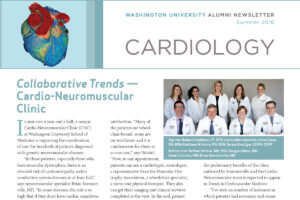
Collaborative Trends — Cardio-Neuromuscular Clinic – In just over a year and a half, a uniqueCardio-Neuromuscular Clinic (CNC) at Washington University School of Medicine is improving the coordination of care for hundreds of patients diagnosed with genetic neuromuscular diseases.

Genetic error that increases risk of aortic rupture identified

A study led by Washington University School of Medicine in St. Louis, in collaboration with Brigham and Women’s Hospital in Boston, has identified a genetic error that weakens the aorta, placing patients with this and similar errors at high risk of aortic aneurysms and ruptures. The findings will help diagnose, monitor and treat patients with […]