New Appointments to Interventional and Structural Cardiology Section

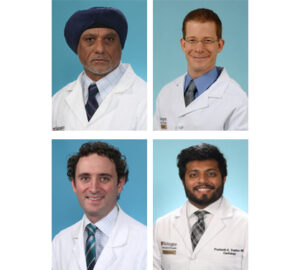
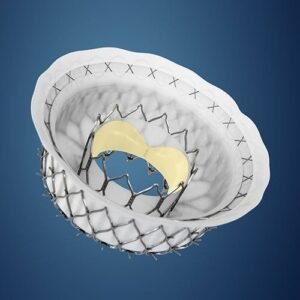
The scope of interventional and structural cardiology has expanded rapidly over the past few years, with broad implications for patient care, training, and clinical research. To reflect these changes and be better equipped to meet dynamic present and future needs, the Cardiology Division is restructuring the section of Interventional and Structural Cardiology; this entails several new roles for division faculty.

Study on Cardiovascular Risk Factors by Dr. Joynt Maddox Published in JAMA (Links to an external site)

In this serial cross-sectional study of 12 924 adults aged 20 to 44 years, there were increases in the prevalence of diabetes (from 3.0% to 4.1%) and obesity (from 32.7% to 40.9%), no improvement in the prevalence of hypertension (from 9.3% to 11.5%), and a decrease in the prevalence of hyperlipidemia (from 40.5% to 36.1%) from 2009-2010 to 2017-2020. Black young adults had the highest rates of hypertension over the study period, and increases in hypertension were observed among Mexican American and other Hispanic adults, while Mexican American adults experienced a significant rise in diabetes. Blood pressure control did not significantly change among young adults treated for hypertension, while glycemic control remained suboptimal throughout the study period.

VAD Program Celebrates 25 Years (Links to an external site)

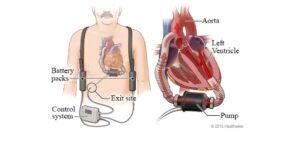
The Washington University and Barnes-Jewish Hospital Heart and Vascular Center celebrates its VAD program’s 25th anniversary, maintaining the same goal — offering advanced heart failure patients a chance at a longer, better life.

Across its 25 years, the program has implanted more than 1,100 VADs in patients, placing it among the top 10 programs in volume in the U.S.

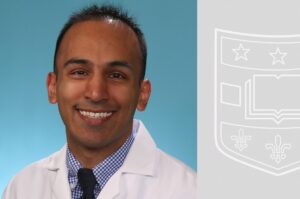
Welcoming Dr. S. Zyad Qamer

Zyad Qamer, MD, has joined the Division as an Assistant Professor of Medicine. Dr. Qamer received his undergraduate degree (BA) at New York University in economics, medical degree (MD) from Georgetown University School of Medicine. Dr. Qamer completed an internal medicine residency at Medstar Georgetown University Hospital where he also completed a fellowship in cardiovascular […]

Dr. Mark Huffman on Healthier Blood Pressure (Links to an external site)

Huffman

Stunning as it may sound, nearly half of Americans ages 20 years and up – or more than 122 million people – have high blood pressure, according to a 2023 report from the American Heart Association. And even if your numbers are normal right now, they are likely to increase as you age; more than […]

Dr. Angela Brown Promotes Women’s Heart Health on KPLR News

Last week, cardiology division faculty member and Director of the Hypertension Clinic Dr. Angela Brown appeared on the Pulse of St. Louis segment of KPLR news. She was part of a panel to discuss high blood pressure and women’s heart health for Heart Month. Dr. Brown spoke about the importance of blood pressure screening and […]

Scientist in the Spotlight: Lindsay Underhill’s career path in global health (Links to an external site)

Lindsay Underhill, PhD, MPH

The Washington University in St. Louis community encompasses many talented researchers of diverse academic interests and disciplines. As a member of the Global Health Student Advisory Committee, I recently spoke with Lindsay Underhill, PhD, MPH, a global environmental health researcher and instructor of medicine. Her research focuses on the implementation and effectiveness of built environment, […]

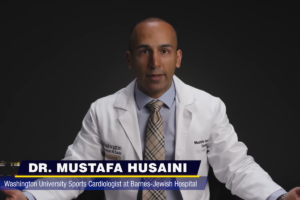
Science of St. Louis Blues with Dr. Mustafa Husaini

Mustafa Husaini, MD

The St. Louis Blues NHL team and Washington University Physicians have collaborated with Barnes-Jewish Hospital to create a series of videos on the Science of Blues Hockey. Hosted by Karlie Kloss, the latest video features Dr. Mustafa Husaini, Cardiovascular Division faculty member and director of our sports cardiology program.

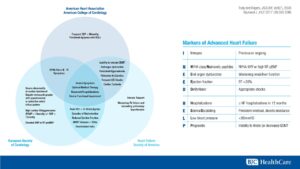
Redefining Advanced Heart Failure (Links to an external site)

Today, patients with congestive heart failure have more treatment options than ever before, and traditional advanced therapies have greatly improved over the last decade. Nationally ranked in Cardiology and Heart Surgery by U.S. News & World Report, our advanced heart failure cardiologists at the Washington University and Barnes-Jewish Heart and Vascular Center work with patients’ current cardiologists and primary care physicians to provide them with the best possible outcomes.

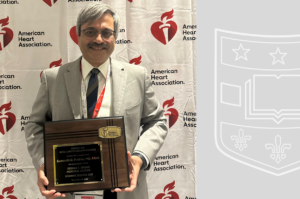
Cardiovascular Division Faculty Present at AHA Conference; Dr. Prabhu Honored

Many Washington University School of Medicine Faculty were present and presenting at the 2022 American Heart Association Annual Scientific Sessions, held in Chicago. Cardiovascular Division Chief Sumanth Prabhu, MD was honored as the George E. Brown Memorial Lecturer. Mark Huffman, MD, MPH presented late-breaking clinical trial findings from a US based QUARTET study on drug […]

A HISTORY OF HEART FAILURE—AND RECOVERY (Links to an external site)

Just a few hundred years ago, the heart and its function were a bit of a mystery. And when the heart malfunctioned, treatment options were few and often ineffective. Today’s cardiologists offer their patients treatments that can lead to recovery.

To date, an Egyptian man named Nebiri, also known as Chief of Stables, is the oldest-known case of heart failure. Thanks to a German pathologist’s examination of 3,500-year-old mummified remains, it’s believed Nebiri died of pulmonary edema caused by heart failure.
Just a few hundred years ago, the heart and its function were a bit of a mystery. And when the heart malfunctioned, treatment options were few and often ineffective. Today’s cardiologists offer their patients treatments that can lead to recovery.

To date, an Egyptian man named Nebiri, also known as Chief of Stables, is the oldest-known case of heart failure. Thanks to a German pathologist’s examination of 3,500-year-old mummified remains, it’s believed Nebiri died of pulmonary edema caused by heart failure.

Dr. Mustafa Husaini Elected to ACC Cardiovascular Management Leadership Council

Dr. Husaini Mustafa of the cardiovascular division was elected this week to the American College of Cardiology’s Cardiovascular Management Leadership Council. With this 3-year appointment, the ACC recognizes Dr. Mustafa’s outstanding contributions to cardiovascular medicine and his leadership in advancing the ACC’s goals of innovation and knowledge to optimize cardiovascular care and outcomes.

Washington University School of Medicine Among Sites of new HFpEF Study

The National Institute of Aging (NIA), part of the National Institutes of Health, recently awarded Wake Forest University School of Medicine a five-year grant expected to total $30 million to support research to test a novel rehabilitation program designed for older patients hospitalized for acute heart failure. Washington University School of Medicine/Barnes-Jewish Hospital will serve as one of the 20 sites for this important study.
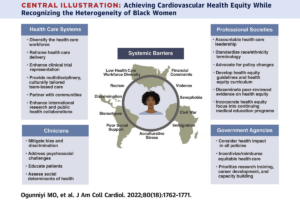
Dr. Zainab Mahmoud Co-Authors Paper on Disparities in Cardiovascular Health in Black Women

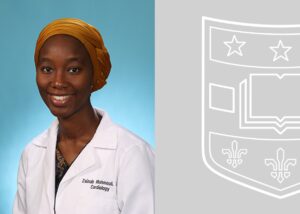
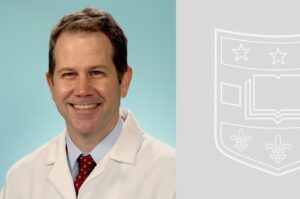
Cardiovascular Division Instructor in Medicine Zainab Mahmoud, MD, MSc, co-authored a paper entitled “Eliminating Disparities in Cardiovascular Disease for Black Women”, published in the latest edition of the Journal of the American College of Cardiology. Some of the findings of the paper were: The paper was named as JACC Review Topic of the Week for […]

Dr. Mark Huffman Will Serve as Faculty Lead for Trust and Public Health Transdisciplinary Team

Huffman

The Washington University Incubator for Transdisciplinary Futures announced Mark Huffman, MD, MPH as a faculty lead of the Trust and Public Health cluster this week. According to the ITF website, the mission of the organization “is to nurture innovative academic configurations that may endure—and even become research and educational models to follow—thus transforming not only […]

Dr. Linda Peterson Inducted as President of Society for Heart and Vascular Metabolism

Cardiovascular Division faculty member Linda Peterson, MD, was inducted as president of the Society for Heart and Vascular Metabolism last month at their 19th annual Scientific Sessions, hosted in Seoul, South Korea.

The Society was founded in 2000, with the intent of providing a forum for the free exchange of ideas by a group of investigators with a special interest in the multiple roles of intermediary metabolism in the cardiovascular system. An important aim of the Society is to foster interactions between young investigators and senior scientists in an informal setting.

Summer 2022 WashU Alumni Newsletter (pdf) (Links to an external site)

Summer 2022 WashU Alumni Newsletter thumbnail

Celebrating 75 Years of Distinction – Groundbreaking research in the use of thrombolytics for acute myocardial infarction (AMI). Advancements in cardiac imaging, mechanical assist devices, and aortic and mitral valve repair. Development of the MAZE procedure to treat chronic atrial fibrillation. Internationally recognized research into cardio-genetics, heart failure, and other areas that have led to […]

ACC, AHA Issue Aortic Disease Guideline, Recommend Genetic Screening

The American College of Cardiology (ACC) and the American Heart Association (AHH) on Wednesday published updated guidelines on the diagnosis and management of aortic disease, focusing on surgical intervention considerations, consistent imaging practices, genetic and familial screenings, and the importance of a multidisciplinary aortic team.
Dr. Alan Braverman of the Washington University School of Medicine’s cardiovascular division served on the writing committee for the updated guidelines.

Department of Medicine names diversity, equity leaders

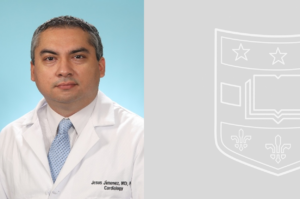
Jesus Jimenez

Jesus Jimenez, MD, PhD, has been appointed as the Director for Diversity, Equity, and Inclusion for Fellows and Postdoctoral trainees in the Department of Medicine. Dr. Jimenez grew up in southern California and completed his undergraduate degree in Molecular Biology at the University of California, San Diego. He joined the Medical Scientist Training Program and received […]

Tenth Annual Cardiovascular Research Day October 13, 2022

The cardiovascular division is hosting the tenth annual Cardiovascular Research Day this Thursday, October 13th! Join us for posters, presentations, and lectures celebrating basic, clinical and translational cardiovascular research at Washington University.

Valve Team Performs First Transseptal Transcatheter Mitral Valve Replacement

As part of the Apollo clinical trial, a team of Wash U physicians successfully completed a transseptal transcatheter mitral valve replacement at Barnes-Jewish Hospital. Washington University is the only participating Missouri location for the trial. The surgical team included the Cardiovascular Division’s Dr. Alan Zajarias, Dr. Marc Sintek, Dr. Majesh Makan, and Dr. Sam Lindner […]

RSVP for the Cardiovascular Division 75th Anniversary Celebration

On November 11, 2022 the Washington University School of Medicine Cardiovascular Division will be celebrating our 75th Anniversary! You won’t want to miss this event, which will include guest speakers, panels with current and former faculty and fellows, and more. The celebration will take place at the Eric P. Newman Education Center on the Medical […]

4th Annual Heart Team Summit Comes to St. Louis

Join faculty members in the Divisions of Cardiothoracic Surgery and Cardiology at Washington University School of Medicine as they unite with Northwestern University Feinberg School of Medicine and Ascension St. Vincent Heart Center of Indiana for the 4th Annual Heart Team Summit.

This event will begin on Friday, October 21, and conclude on Saturday, October 22, at the Four Seasons Hotel (999 N 2nd St) in St. Louis.

Institute for Public Health to Hold Special Seminar: Algorithms of Oppression

Cardiovascular division faculty members Karen Joynt Maddox (co-Director, Center for Health Economics & Policy) and Gmerice Hammond (Associate Director, Center for the Study of Race, Ethnicity & Equity) along with their colleagues at the Institute of Public Health will be hosting a seminar October 19th entitield Algorithms of Oppression, presented by Dr. Safiya U. Noble. 

Faculty receive $6.1M NIH grant for maternal health study (Links to an external site)

Three faculty from the Brown School and the School of Medicine at Washington University in St. Louis have received a seven-year $6.1 million grant from the National Institutes of Health (NIH) aimed at improving the health of mothers and children in the St. Louis region. The project, titled “Enhancing Cardiovascular Health Equity in Mothers and […]

Low testosterone may increase risk of COVID-19 hospitalization for men (Links to an external site)

Among men diagnosed with COVID-19, those with low testosterone levels are more likely to become seriously ill and end up in the hospital than men with normal levels of the hormone, according to a study by researchers at Washington University School of Medicine in St. Louis and Saint Louis University School of Medicine.

The team analyzed the cases of 723 men who tested positive for COVID-19, mostly in 2020 before vaccines were available. The data indicate that low testosterone is an independent risk factor for COVID-19 hospitalization, similar to diabetes, heart disease and chronic lung disease.

Dr. Stacey Rentschler and Colleagues Receive NIH Grant to Fund Study on Radiation Therapy for VT Patients

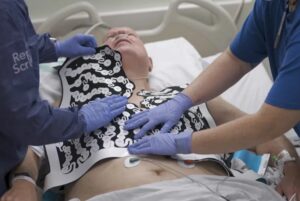
Stacey Rentschler, MD, PhD in collaboration with many other Washington University researchers within and outside the cardiovascular division recently received an NIH grant totaling over $3 million to further study a major breakthrough in a non-invasive treatment for ventricular tachycardia. The grant follows a 2021clinical study from Washington University School of Medicine brought together cardiologists, […]

New Clinical Trial for Evoque Valve Comes to Valvular Heart Disease Center

Dr. Alan Zajarias and the team at the Valvular Heart Disease Center have been invited to join the Edwards Triscend 2 pivotal trial, testing the safety and effectiveness of the Evoque valve device in patients with tricuspid regurgitation. The Evoque tricuspid valve replacement system is designed to use an implant to replace the native tricuspid […]

New Drug, Positive Results for Hypertrophic Cardiomyopathy (Links to an external site)

An estimated 1,000,000 people in the U.S. have hypertrophic cardiomyopathy. Washington University interventional cardiologist Richard Bach, MD, FACC, and his team had exhausted non-invasive treatments for a patient suffering from HCM. Until, that is, Bach enrolled the man, who was in his 50s, in a clinical trial evaluating a drug called mavacamten.

Leadership Announcement – DOM Vice Chair of Clinical Research (Links to an external site)

It is my pleasure to announce that Dr. Nancy K. Sweitzer, Professor of Medicine, has joined Washington University School of Medicine as the Vice Chair of Clinical Research for the Department of Medicine and Director of Clinical Research for the Division of Cardiology. Dr. Sweitzer joins us from the University of Arizona in Tucson, where she had been the Chief of Cardiovascular Medicine, Director of the Sarver Heart Center and Co-Director of the Clinical Translational Sciences Graduate Program for the University of Arizona Health Sciences.

Cardiovascular inflammation, heart failure focus of $6 million grant (Links to an external site)

Researchers at Washington University School of Medicine in St. Louis have received a $6 million grant from the National Heart, Lung, and Blood Institute of the National Institutes of Health (NIH) to harness new understandings of the immune system to develop innovative therapies for heart failure and the prevention of organ rejection following heart transplantation.

Winter 2022 WashU Alumni Newsletter (pdf) (Links to an external site)

Winter 2022 WashU Alumni Newsletter thumbnail

Tricuspid Regurgitation – Setting Standards for Diagnosis, Repair & Replacement. The Valve Team at Washington University School of Medicine is among the first in theworld to use a transfemoral transcatheter device for the treatment of severe tricuspidregurgitation (TR).

Diabetes, metabolic syndrome in mice treated with novel class of compounds (Links to an external site)

A study in mice — led by researchers at Washington University School of Medicine in St. Louis — shows that a new class of compounds the scientists developed can improve multiple aspects of metabolic syndrome. An increasingly common group of conditions that often occur together, metabolic syndrome includes type 2 diabetes, high cholesterol, fat buildup in the liver, and excess body fat, especially around the waist. This syndrome often leads to cardiovascular disease, the leading cause of death worldwide.

Popular heart failure drug no better than older drug in sickest patients (Links to an external site)

A new study led by researchers at Washington University School of Medicine in St. Louis suggests that a widely used heart failure drug named sacubitril/valsartan is no better than valsartan alone in patients with severe heart failure. The study also provides evidence that the treatment with valsartan may be slightly safer for patients with advanced heart failure.

Institute for Public Health names new director of the Global Health Center (Links to an external site)

The Institute for Public Health announces the appointment of Victor G. Dávila-Román, MD, as director of its Global Health Center. He was also named vice chair of global health in the Department of Medicine at the School of Medicine. Dávila-Román is professor of medicine in the cardiovascular division of the Department of Medicine, and a professor of anesthesiology and radiology at the School of Medicine. He earned his medical degree from the University of Puerto Rico, and has been affiliated with Washington University since 1986.
Summer 2021 WashU Alumni Newsletter (pdf) (Links to an external site)

Summer 2021 WashU Alumni Newsletter thumbnail

New Cardiovascular Division Chief Named – Sumanth D. Prabhu, MD, an internationally recognized expert in how immunity and inflammation contribute to heart failure, has been named the new Chief of the Cardiovascular Division in the Department of Medicine at Washington University School of Medicine. Upon joining our division on September 1, 2021,Dr. Prabhu also will […]

Research to explore how genes, other factors affect cardiometabolic disease risk (Links to an external site)

Researchers at Washington University School of Medicine in St. Louis have received a four-year, $8.8 million grant to ramp up research aimed at unraveling how an individual’s risks of cardiometabolic diseases, such as heart disease and Type 2 diabetes, are influenced by the interaction of specific genes with demographic and lifestyle factors.

Prabhu named cardiovascular division director (Links to an external site)

Sumanth D. Prabhu, MD, an internationally recognized expert in how immunity and inflammation contribute to heart failure, has been named director of the Cardiovascular Division in the Department of Medicine at Washington University School of Medicine in St. Louis. He also will become cardiologist-in-chief at Barnes-Jewish Hospital and the Tobias and Hortense Lewin Distinguished Professor of Cardiovascular Diseases at the School of Medicine when his appointment begins Sept. 1.

Hammond receives Merck research fellowship (Links to an external site)

J. Gmerice Hammond, MD, a cardiologist and health policy research fellow in the Cardiovascular Division at Washington University School of Medicine in St. Louis, has received a Merck Fellowship Research Award from the Association of Black Cardiologists and the American College of Cardiology.

Scientists find genetic link to clogged arteries (Links to an external site)

High cholesterol is the most commonly understood cause of atherosclerosis, a hardening of the arteries that raises the risk of heart attack and stroke. But now, scientists at Washington University School of Medicine in St. Louis have identified a gene that likely plays a causal role in coronary artery disease independent of cholesterol levels. The gene also likely has roles in related cardiovascular diseases, including high blood pressure and diabetes.

COVID-19 can kill heart muscle cells, interfere with contraction (Links to an external site)

Since early in the pandemic, COVID-19 has been associated with heart problems, including reduced ability to pump blood and abnormal heart rhythms. But it’s been an open question whether these problems are caused by the virus infecting the heart, or an inflammatory response to viral infection elsewhere in the body. Such details have implications for understanding how best to treat coronavirus infections that affect the heart.

Immune therapies for heart disease aim of international research network (Links to an external site)

When a patient arrives in the emergency room with symptoms of a heart attack, doctors’ first priority is to restore blood flow to the heart muscle. Over the past few decades, therapeutic advances aimed at getting blood flowing and reducing strain on the heart have improved patients’ chances of surviving heart attacks to more than 90% from 50%.