Dr. Richard Bach published an editorial published in JAMA (the Journal of the American Medical Association) entitled “Traditional Chinese Medicine Meets Evidence-Based Medicine in the Acutely Infarcted Heart”.
Bach Publishes Editorial In JAMA

Dr. Richard Bach published an editorial published in JAMA (the Journal of the American Medical Association) entitled “Traditional Chinese Medicine Meets Evidence-Based Medicine in the Acutely Infarcted Heart”.
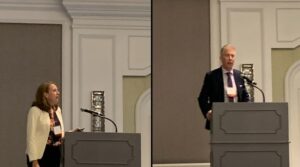
Drs. Karen Joynt-Maddox and Thomas Maddox, both of the Washington University School of Medicine Cardiovascular Division, were recently inducted as members into the American Clinical and Climatological Association (ACCA).

Dr. Krasimira Mikhova joined the Department of Medicine in the Cardiovascular Division as an assistant professor in August 2023. She completed her undergraduate studies at Arizona State University where she graduated Summa Cum Laude in Chemical Engineering. She earned her medical degree at the University of Washington School of Medicine in Seattle. Dr. Mikhova completed residency training in Internal Medicine at the University of Michigan, prior to relocating to St. Louis for Cardiology and Electrophysiology fellowship at Washington University School of Medicine in St. Louis.
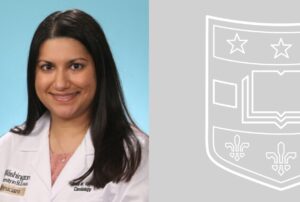
The American Medical Women’s Association (AMWA) recently announced the recipients of the 2023 INSPIRE awards, and among the honorees is Cardiovascular Division faculty and Director of Cardio-Obstetrics Dr. Amanda Verma.

The Department of Medicine is proud to announce that 112 of our faculty have been selected for the 2023 Castle Connolly Top Doctors® list.

For Washington University cardiologist Sumanth Prabhu, MD, the stethoscope is not only indispensable as a diagnostic tool but presents powerful symbolism. He sees it as a channel that connects the patient to the clinician, a conduit through which a current of information flows from the former’s body to the latter’s brain.
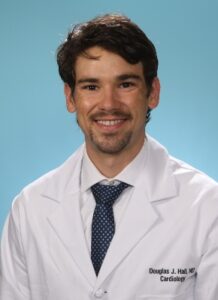
Third-year fellow Dr. Doug Hall contributed a piece for the American College of Cardiology’s Sports and Exercise Cardiology Clinical Topic Collection, entitled “Pacemakers and Settings in the Athlete”. Drs. Krissy Mikhova, Daniel Cooper, and Mustafa Husaini also collaborated, and the work was chosen by ACC.org Editor-in-Chief Dr. Kim Eagle as an Editor’s Pick and featured on the website’s front page.
The piece uses a quiz to challenge readers to take specifics of a case with a patient presenting with issues with their pacemaker, and determine a likely cause and course of action.

AMSTERDAM, the Netherlands—For patients with acute heart failure (HF) and signs of congestion, prompt use of a sodium-glucose cotransporter 2 (SGLT2) inhibitor or a natriuresis-guided approach to diuretic therapy both seem to be viable strategies to enhance removal of excess fluid, according to results from two small trials presented earlier this week at the European Society of Cardiology (ESC) Congress 2023.
Both approaches improved excess fluid removal, but more data are needed to determine the best strategy, Nancy Sweitzer says.

Sándor J. Kovács Jr., PhD, MD, h.c., Professor of Medicine in the Cardiovascular Division, was recently invited to Budapest to a formal inauguration ceremony for the Hungarian Academy of Sciences. Dr. Kovács was honored for his outstanding contributions in the fields of physics and medical sciences, especially in the areas of cardiovascular physiology and biophysics.

The Internal Medicine Residents of the class of 2023 voted to recognize faculty who had made a positive impact on their training. Two awards were given for Teacher of the Year, Cardiology. The recipients were Dr. Richard Bach and Dr. Adam May.

Thomas M. Maddox, MD, a professor of medicine in the Cardiology Division at Washington University School of Medicine in St. Louis, has been named to the National Academy of Medicine’s Digital Health Action Collaborative. The group fosters improvements and innovation in the ways health data and digital technologies are developed and applied to maximize population-level and patient health.

Sharon Cresci, MD, Associate Professor of Medicine and Genetics in the Cardiovascular Division and Associate Director of the WashU Barnes-Jewish Hospital Hypertrophic Cardiomyopathy Center, recently received a five-year R01 grant from the National Institutes of Health/National Heart, Lung and Blood Institute. The grant is entitled “Determining Potential Mechanisms of Worse Outcomes in Black HCM Patients”.

“We had hoped that the rates of aspirin use for secondary prevention would be much higher. Particularly I think, overall, globally, there has been an emphasis on improving cardiovascular health, and one of the efforts is to improve use of some of these evidence-based medications,” said Dr. Sang Gune Yoo, an author of the study and a cardiovascular disease fellow in the cardiovascular division at Washington University School of Medicine in St. Louis.
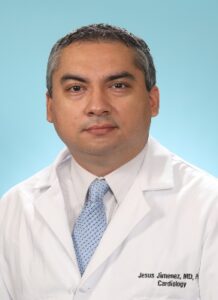
The Office of Diversity, Equity, and Inclusion has awarded Jesus M. Jimenez, MD, PhD of the Cardiovascular Division the Faculty Diversity Scholars Program Award. Other School of Medicine faculty recipients included Felicia I. Gomez, PhD, and Felipe Almeida de Pinho Ribeiro, MD.

At the Heart Care Institute, located at the Barnes-Jewish West campus, the cardiac rehab program provides care and education to patients after they experience heart surgery or a serious cardiac event. The team of physicians, nurses, exercise physiologists, and dietitians work individually with patients to help them recover and strengthen their heart health.


After conducting a rigorous on-site survey, The Joint Commission has issued a certification to Barnes-Jewish Hospital as a Comprehensive Cardiac Center. Launched in 2017, Comprehensive Cardiac Center Certification is a voluntary program for hospitals seeking an independent evaluation and recognition of their comprehensive cardiac center services. The program was designed for hospitals with robust cardiac care facilities, aiming […]

Congratulations to the recipients of the inaugural AWAM Leaders in Empowerment and Development (LEAD) Award!
This year’s award winners are Amanda K. Verma, MD (Assistant Professor of Medicine) and Abby Spencer, MD (Professor of Medicine).The Department of Medicine greatly appreciates and values Dr. Verma’s and Spencer’s contributions toward advancing women’s career development!

“It’s getting to be time where athletics are starting, young children are outside and all those things,” said Dr. Marc Sintek a Washington University cardiologist at Barnes-Jewish Hospital, “I think it’s important to recognize that heat-related illnesses are a really big problem this time of year for a lot of young people who are otherwise healthy.”
But Sintek said people don’t realize the dangers of heat.
“When it becomes very cold in St. Louis or there are ice storms or it is below zero, everyone seems to do a pretty good job of staying at home and not going outside. But it seems like when it is 110 degrees outside and the humidity is 90%, it’s just like we will go out and do whatever.”
Do not get tempted by sunshine and blue skies. “People need to recognize that they’re extremes, but they are both potentially hazardous,” Sintek said.
A growing body of research shows that polypills can be an inexpensive, effective way to reduce the risk of heart problems, with studies indicating that they can cut the risk of cardiovascular problems by almost 40%. But even though heart complications like heart disease and heart attacks kill 18 million people each year, only a few companies manufacture polypills, and few people take them.
Drs. Mark Huffman and Anubha Agarwal of Wash U’s Program in Global Cardiovascular Health were instrumental in advocating for the addition of polypills.

A new policy statement aimed at clinicians treating patients with cardiovascular disease has provided a snapshot of value-based payment programs and laid out a vision for what they should look like as the US healthcare system increasingly shifts away from fee-for-service models..
For certain types of situations, getting paid for each discrete encounter, intervention, or procedure makes sense, “but for preventive care and chronic care, we’re really starting to understand that we need to move toward thinking about paying for care quite differently,” Karen Joynt Maddox, MD (Washington University School of Medicine in St. Louis, MO), vice chair of the American Heart Association (AHA) writing group and senior author of the paper, told TCTMD.

Dr. Alan Braverman, Alumni Endowed Professor of Cardiovascular Diseases and Director of the Washington University School of Medicine Marfan Syndrome Clinic, has travelled this summer to conferences in Isreal and Spain.

Tuesday July 27th, Cardiovascular Division Chief Sumanth Prabhu, MD accepted the Innovator Award at the North American Meeting of the International Society of Heart Research, held this year in Madison, WI.

Cardiovascular Division Chief Dr. Sumanth Prabhu has announced that Kory Lavine, MD, PhD, will serve as the next Director of the Center for Cardiovascular Research (CCR), effective July 1, 2023. Dr. Lavine is currently Associate Professor of Medicine and Associate Director of the CCR. In his new role, he will succeed Dr. Jeanne Nerbonne, who […]
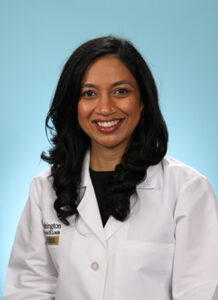
Dr. Anubha Agarwal emigrated from India to the United States with her family when she was about 5 years old. As many immigrant families do, she spent much of her childhood going back and forth, visiting her family in India. During those trips, Agarwal realized the stark differences between the two countries. “Witnessing the inequities between the countries and within each country, I wanted to solve them. Later, I realized that I wanted to do that as a physician,” she said.
Dr. Amanda Verma, a heart failure and transplant specialist and Interim Director of cardio-obstetrics at the Washington University School of Medicine cardiovascular division, was recently appointed by the Heart Failure Society of America to their Women in Heart Failure Committee.

A study published this month in the New England Journal, “Transplantation Outcomes with Donor Hearts after Circulatory Death” looked at outcomes of recipients of heart transplants where the donor had experienced circulatory death compared to those with donors who had experienced brain death.
The accompanying editorial by Professor of Medicine and Director of Clinical Research for the cardiovascular division, Dr. Nancy Sweitzer was also highlighted in news coverage of the trial publication.

Karen E. Joynt Maddox, MD, MPH, FACC, associate professor of medicine at Washington University in St. Louis, MO, was among those testifying before the Committee. She spoke on the role private equity plays in the current market, the importance of increased data collection on ownership, quality and cost, and the continued shift towards value-based care.

The Alpha Omega Alpha Executive and Selection committees announce the new faculty, alumni and house officers to the Alpha Omega Alpha Honor Medical Society Class of 2023, including Professor Gregory Ewald, MD of the Washington University Cardiovascular Division. AΩA is the honor medical society recognizing, advocating for, and inspiring physicians in the care of patients […]

Washington University cardiovascular division faculty member Dr. Adam May contributed to “Multidisciplinary Critical Care Management of Electrical Storm: JACC State-of-the-Art Review“, published in the Journal of the American College of Cardiology this month. The review focuses on the cardiac condition known as electrical storm, defined by “electrical instability with 3 or more ventricular arrhythmia episodes within 24 […]

Washington University cardiovascular division faculty Drs. Sharon Cresci, Gmerice Hammond, and Karen Joynt Maddox as well as cardiovascular research fellow Dr. Daniel Fox, published “Inequities in Treatments and Outcomes Among Patients Hospitalized With Hypertrophic Cardiomyopathy in the United States” in the Journal of the American Heart Association May 26th.

She attributes much of her current success to her time as an NIH Fogarty fellow from 2017-2018 while based in India. The Fogarty Global Health Training Programs offers a one-year mentored clinical research training opportunity for doctoral students and post-doctoral candidates from the U.S. and low and middle-income countries (LMICs), sponsored by the National Institutes of Health (Fogarty International Center) in partnership with several NIH Institutes and Offices.

One of the largest health burdens in Nigeria is hypertension. According to the Global Burden of Disease, hypertension combined with other cardiovascular disease, affects more than 70 million people in Nigeria. Co-Director of the Global Health Center, Mark Huffman, MD, MPH, and a research team at Washington University in St. Louis, are collaborating with University of Abuja in Nigeria, Northwestern University in Chicago, the World Health Organization (WHO), the Federal Ministry of Health of Nigeria, and other key stakeholders on two projects on hypertension prevention and treatment in Nigeria.

The Academy of Educators at the Washington University School of Medicine Office of Education recently held their annual Distinguished Service Teaching Awards Ceremony. Cardiovascular Division faculty member Justin Sadhu, MD, MPHS received two awards for his outstanding contributions to education at Washington University.
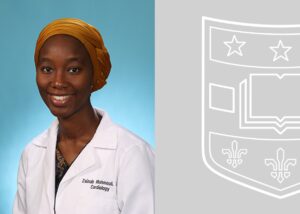
The Paul and Patti Eisenberg Scholar Award is presented annually by the Washington University School of Medicine Cardiovascular Division to fund junior faculty research that broadly focuses on cardiovascular disease. Funds should be used to generate key preliminary data and/or to develop new areas of research. Dr. Zainab Mahmoud is this year’s recipient of the […]
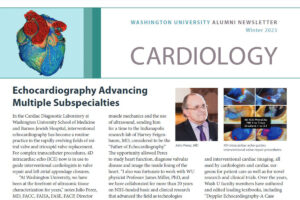
Echocardiography Advancing Multiple Subspecialties. In the Cardiac Diagnostic Laboratory at Washington University School of Medicine and Barnes-Jewish Hospital, interventional echocardiography has become a routine practice in the rapidly evolving fields of mitral valve and tricuspid valve replacement.
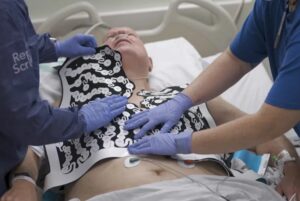
Doctors are zapping the heart with radiation normally reserved for cancer, a bid to better treat people with life-threatening irregular heartbeats who’ve exhausted other options.
While it’s highly experimental, surprising early research suggests it may reprogram misfiring heart cells to control heartbeats more like younger, healthier cells do.
“It may actually rejuvenate sick tissue, and that’s pretty exciting,” said Dr. Stacey Rentschler of Washington University in St. Louis.
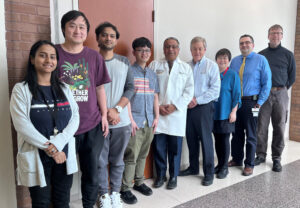
The Diwan Lab, in the Center for Cardiovascular Research, is dedicated to the study of lysosomes, and seeks to understand how these cell parts can be targeted by therapies to treat and prevent cardiovascular diseases, diabetes, Alzheimer’s disease and more. Lysosomes are organelles, parts within cells that serve several biological functions. The Diwan Lab has […]
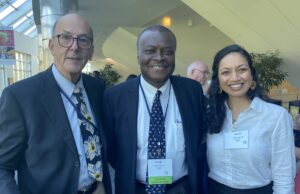
On April 13th, the Fogarty International Center at the National Institutes of Health celebrated 20 years of their Global Health fellows and scholars program, LAUNCH. Dr. Anubha Agarwal of the Washington University Cardiovascular Division was invited to speak on a panel of alumni of the program. According to the NIH website, “The mission of the […]
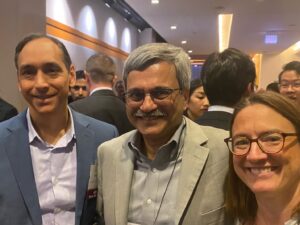
Over the weekend, four Washington University School of Medicine Cardiovascular Division faculty were honored at induction ceremonies for professional associations.
BJC hospitals, service organizations and medical practices earned a total of 171 PRC Excellence in Healthcare Awards in 2023, an increase of 20 over last year. Fifteen teams earned Top Performer awards, including the Cardiovascular Procedure Center and HCI, or Heart Care Institute.
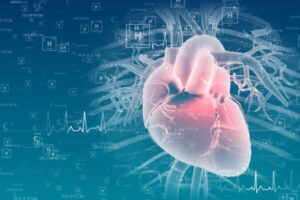
Jonathan Silva, the Dennis & Barbara Kessler Career Development Associate Professor at the McKelvey School of Engineering, and Jeanne Nerbonne, Alumni Endowed Professor of Molecular Biology & Pharmacology in Medicine and Developmental Biology at the School of Medicine, and their labs found distinct effects of novel proteins, known as intracellular fibroblast growth factors (iFGF), on the regulation of the kinetics of cardiac sodium channel gating. Their results were published in the Journal of General Physiology March 21.

Dr. Shibali Das joined the Department of Medicine in the Cardiovascular Division as an instructor in February of 2023. She received her BSc and MSc degree in Microbiology from University of Calcutta Kolkata, India. She then pursued her doctoral degree in Bio-chemistry at Bose Institute, in collaboration with University of Calcutta. Her doctoral research focused on Immunotherapeutic approaches to tuberculosis including the development of novel immunomodulatory agents for therapy, elucidation of mechanisms of action of new therapeutic agents, mechanisms of immunosuppression during tuberculosis and regulation of host innate and adaptive immune response.
Interpreting Incidentally Identified Variants in Genes Associated With Heritable Cardiovascular Disease: A Scientific Statement From the American Heart Association
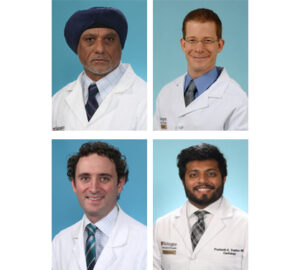
The scope of interventional and structural cardiology has expanded rapidly over the past few years, with broad implications for patient care, training, and clinical research. To reflect these changes and be better equipped to meet dynamic present and future needs, the Cardiology Division is restructuring the section of Interventional and Structural Cardiology; this entails several new roles for division faculty.
In this serial cross-sectional study of 12 924 adults aged 20 to 44 years, there were increases in the prevalence of diabetes (from 3.0% to 4.1%) and obesity (from 32.7% to 40.9%), no improvement in the prevalence of hypertension (from 9.3% to 11.5%), and a decrease in the prevalence of hyperlipidemia (from 40.5% to 36.1%) from 2009-2010 to 2017-2020. Black young adults had the highest rates of hypertension over the study period, and increases in hypertension were observed among Mexican American and other Hispanic adults, while Mexican American adults experienced a significant rise in diabetes. Blood pressure control did not significantly change among young adults treated for hypertension, while glycemic control remained suboptimal throughout the study period.
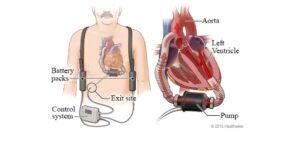
The Washington University and Barnes-Jewish Hospital Heart and Vascular Center celebrates its VAD program’s 25th anniversary, maintaining the same goal — offering advanced heart failure patients a chance at a longer, better life.
Across its 25 years, the program has implanted more than 1,100 VADs in patients, placing it among the top 10 programs in volume in the U.S.

Zyad Qamer, MD, has joined the Division as an Assistant Professor of Medicine. Dr. Qamer received his undergraduate degree (BA) at New York University in economics, medical degree (MD) from Georgetown University School of Medicine. Dr. Qamer completed an internal medicine residency at Medstar Georgetown University Hospital where he also completed a fellowship in cardiovascular […]
We are pleased to announce that after a national search for a new Division Chief of Cardiology at the St. Louis VA Medical Center, and reviewing a deep and impressive group of candidates, the committee has selected Dr. Abhinav Diwan as the new Chief of Cardiology.
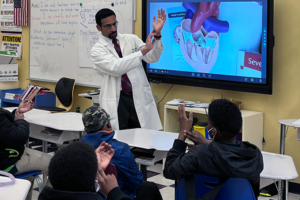
On Friday February 3rd, the students at Barak Obama Elementary School got an education in heart health as faculty and staff from the Washington University School of Medicine Cardiovascular Division visited science classes with hands-on presentations.