New Drug, Positive Results for Hypertrophic Cardiomyopathy (Links to an external site)
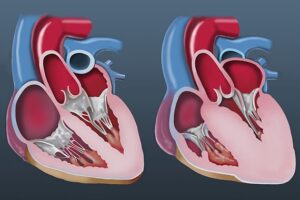
An estimated 1,000,000 people in the U.S. have hypertrophic cardiomyopathy. Washington University interventional cardiologist Richard Bach, MD, FACC, and his team had exhausted non-invasive treatments for a patient suffering from HCM. Until, that is, Bach enrolled the man, who was in his 50s, in a clinical trial evaluating a drug called mavacamten.
Leadership Announcement – DOM Vice Chair of Clinical Research (Links to an external site)
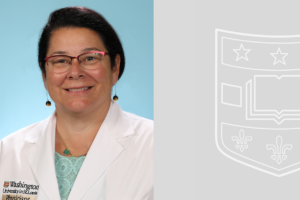
It is my pleasure to announce that Dr. Nancy K. Sweitzer, Professor of Medicine, has joined Washington University School of Medicine as the Vice Chair of Clinical Research for the Department of Medicine and Director of Clinical Research for the Division of Cardiology. Dr. Sweitzer joins us from the University of Arizona in Tucson, where she had been the Chief of Cardiovascular Medicine, Director of the Sarver Heart Center and Co-Director of the Clinical Translational Sciences Graduate Program for the University of Arizona Health Sciences.
Cardiovascular inflammation, heart failure focus of $6 million grant (Links to an external site)
Researchers at Washington University School of Medicine in St. Louis have received a $6 million grant from the National Heart, Lung, and Blood Institute of the National Institutes of Health (NIH) to harness new understandings of the immune system to develop innovative therapies for heart failure and the prevention of organ rejection following heart transplantation.
Winter 2022 WashU Alumni Newsletter (pdf) (Links to an external site)
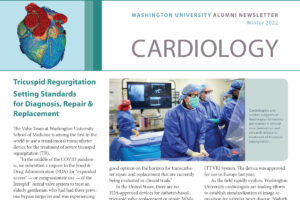
Tricuspid Regurgitation – Setting Standards for Diagnosis, Repair & Replacement. The Valve Team at Washington University School of Medicine is among the first in theworld to use a transfemoral transcatheter device for the treatment of severe tricuspidregurgitation (TR).
Diabetes, metabolic syndrome in mice treated with novel class of compounds (Links to an external site)
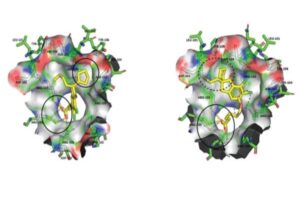
A study in mice — led by researchers at Washington University School of Medicine in St. Louis — shows that a new class of compounds the scientists developed can improve multiple aspects of metabolic syndrome. An increasingly common group of conditions that often occur together, metabolic syndrome includes type 2 diabetes, high cholesterol, fat buildup in the liver, and excess body fat, especially around the waist. This syndrome often leads to cardiovascular disease, the leading cause of death worldwide.
Popular heart failure drug no better than older drug in sickest patients (Links to an external site)
A new study led by researchers at Washington University School of Medicine in St. Louis suggests that a widely used heart failure drug named sacubitril/valsartan is no better than valsartan alone in patients with severe heart failure. The study also provides evidence that the treatment with valsartan may be slightly safer for patients with advanced heart failure.
Institute for Public Health names new director of the Global Health Center (Links to an external site)
The Institute for Public Health announces the appointment of Victor G. Dávila-Román, MD, as director of its Global Health Center. He was also named vice chair of global health in the Department of Medicine at the School of Medicine. Dávila-Román is professor of medicine in the cardiovascular division of the Department of Medicine, and a professor of anesthesiology and radiology at the School of Medicine. He earned his medical degree from the University of Puerto Rico, and has been affiliated with Washington University since 1986.