Barnes-Jewish Hospital Certified as Comprehensive Cardiac Center by Joint Commission
After conducting a rigorous on-site survey, The Joint Commission has issued a certification to Barnes-Jewish Hospital as a Comprehensive Cardiac Center. Launched in 2017, Comprehensive Cardiac Center Certification is a voluntary program for hospitals seeking an independent evaluation and recognition of their comprehensive cardiac center services. The program was designed for hospitals with robust cardiac care facilities, aiming […]
Dr. Amanda Verma Receives 2023 LEAD Award (Links to an external site)
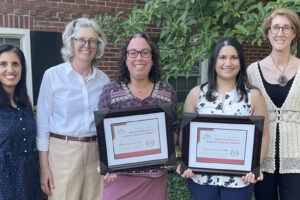
Congratulations to the recipients of the inaugural AWAM Leaders in Empowerment and Development (LEAD) Award!
This year’s award winners are Amanda K. Verma, MD (Assistant Professor of Medicine) and Abby Spencer, MD (Professor of Medicine).The Department of Medicine greatly appreciates and values Dr. Verma’s and Spencer’s contributions toward advancing women’s career development!
Dr. Marc Sintek Discusses Extreme Heat Dangers on KSDK News (Links to an external site)

“It’s getting to be time where athletics are starting, young children are outside and all those things,” said Dr. Marc Sintek a Washington University cardiologist at Barnes-Jewish Hospital, “I think it’s important to recognize that heat-related illnesses are a really big problem this time of year for a lot of young people who are otherwise healthy.”
But Sintek said people don’t realize the dangers of heat.
“When it becomes very cold in St. Louis or there are ice storms or it is below zero, everyone seems to do a pretty good job of staying at home and not going outside. But it seems like when it is 110 degrees outside and the humidity is 90%, it’s just like we will go out and do whatever.”
Do not get tempted by sunshine and blue skies. “People need to recognize that they’re extremes, but they are both potentially hazardous,” Sintek said.
WHO Updates List of Essential Medicines to Include Heart Polypills (Links to an external site)

A growing body of research shows that polypills can be an inexpensive, effective way to reduce the risk of heart problems, with studies indicating that they can cut the risk of cardiovascular problems by almost 40%. But even though heart complications like heart disease and heart attacks kill 18 million people each year, only a few companies manufacture polypills, and few people take them.
Drs. Mark Huffman and Anubha Agarwal of Wash U’s Program in Global Cardiovascular Health were instrumental in advocating for the addition of polypills.
AHA Paper Authored by Dr. Joynt Maddox Reviews Value-Based Payment Systems and Proposes Next Steps (Links to an external site)

A new policy statement aimed at clinicians treating patients with cardiovascular disease has provided a snapshot of value-based payment programs and laid out a vision for what they should look like as the US healthcare system increasingly shifts away from fee-for-service models..
For certain types of situations, getting paid for each discrete encounter, intervention, or procedure makes sense, “but for preventive care and chronic care, we’re really starting to understand that we need to move toward thinking about paying for care quite differently,” Karen Joynt Maddox, MD (Washington University School of Medicine in St. Louis, MO), vice chair of the American Heart Association (AHA) writing group and senior author of the paper, told TCTMD.
Dr. Braverman Presents at International Meetings
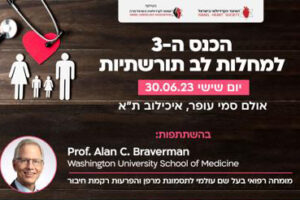
Dr. Alan Braverman, Alumni Endowed Professor of Cardiovascular Diseases and Director of the Washington University School of Medicine Marfan Syndrome Clinic, has travelled this summer to conferences in Isreal and Spain.
Dr. Prabhu Receives ISHR-NAS Innovator Award

Tuesday July 27th, Cardiovascular Division Chief Sumanth Prabhu, MD accepted the Innovator Award at the North American Meeting of the International Society of Heart Research, held this year in Madison, WI.