DOM Insider – Vol. 29 (Links to an external site)
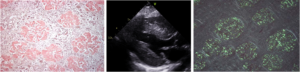
The WashU Medicine Amyloid Center of Excellence has been selected as one of just 10 centers nationwide to participate in the American Heart Association’s ATTR-CM Discovery Initiative, a three-year program aimed at transforming care for patients with transthyretin amyloid cardiomyopathy (ATTR-CM).
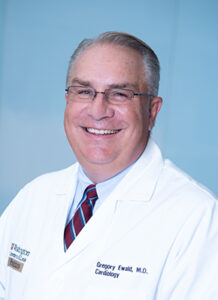
Greg Ewald MD, Director, Section of Heart Failure and Heart Transplantation, has received the 2026 Neville Grant Award for Clinical Excellence. Ewald and other recipients will be recognized at the upcoming BJH Medical Staff Association Semi-Annual meeting. The BJH “Dr. Neville Grant Award for Clinical Excellence” is granted annually to a member of the attending medical staff who, […]

Courtesy of Physician-Scientists Divisional Newsletter What motivated you to become a physician-scientist? I went to undergrad at Colorado College in Colorado Springs. Academically I was passionate about chemistry but was unsure about what with my degree after graduation. One of my professors, Richard Taber, taught a course in biochemistry and after completing it I realized […]
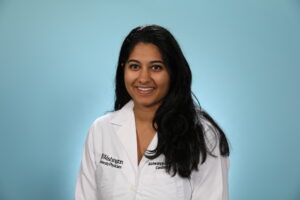
Cardiology Fellow Aishwarya Vijay, MD, is the primary author on a Viewpoint article in JACC, coauthored by Professor of Medicine Sharon Cresci, MD. The paper argues for stronger support for medical trainees experiencing postpartum lactation, and Vijay references her own experience returning to work 8 weeks postpartum.
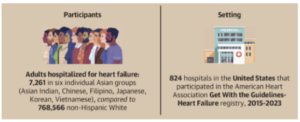
WashU Cardiovascular Division Global Health researchers have published a new article on disparity on heart failure care for Asian patients in the U.S. Mark Huffman, MD, MPH, William Bowen Endowed Professor of Medicine and Co-Director of the Global Health Center, and Anubha Agarwal, MD, MSc an associate professor of medicine and Co-Director of the Program in Global Cardiovascular Health published the research in JACC earlier this year.
When well-known St. Louis radio broadcaster John Carney, 61, experienced a sudden, life-threatening aortic dissection, WashU Medicine experts at Barnes-Jewish Hospital identified the hidden genetic condition behind it—and set out to save his life.
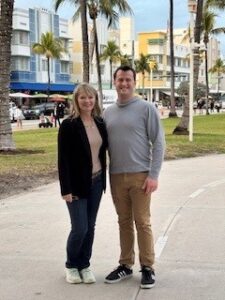
Research Nurse Coordinator Kendall Knobeloch, BSN, RN, and Research Nurse Practitioner Kristi Arnolds, RN, MSN, ANP-BC attended the AMBER HFpEF Investigator Meeting in Miami, Florida. Kendall and Kristi were asked to be on a panel to discuss their successful enrollment strategies. Dr. Hartupee is the PI for this trial and WashU is one of the […]

Obesity, diabetes and high blood pressure are fueling increases in cardiovascular disease, even among much younger women, the American Heart Association said. NBC News interviews WashU Medicine’s Karen Joynt Maddox, MD, MPH.
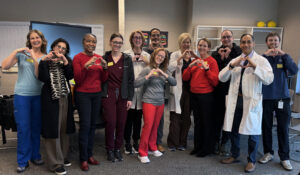
February 2026 was the 10th consecutive year that faculty and staff from the WashU Medicine Cardiovascular Division have visited the Normandy School District to bring heart health education to middle school students. What began in 2016 as Dr. Linda Peterson’s vision to expand medical knowledge to students who might not otherwise have exposure to it has grown into a beloved annual tradition, known as Project Heartstrong. This educational community outreach effort is a meaningful investment in the health and futures of North St. Louis County youth.

WashU Medicine researchers including Cardiovascular Divison’s Kory Lavine, MD, PhD have received two grants from the NIH to study the roles of troponin — a critical protein in the heart — in various forms of heart failure.
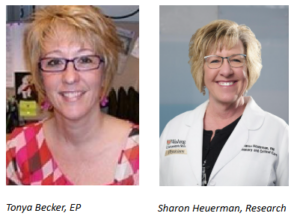
For more than a decade, St. Louis Magazine has hosted its annual Excellence in Nursing Awards, spotlighting the remarkable efforts of nurses in a special print issue each year. Throughout the years, the magazine has recognized more than 500 outstanding nurses across a wide range of practice areas and levels of expertise, from emerging leaders to those with decades of experience. From the Cardiovascular Division, we are proud to recognize two of our outstanding nurses, Tonya Becker of Electrophysiology and Sharon Heuerman of Clinical Research, who are finalists.
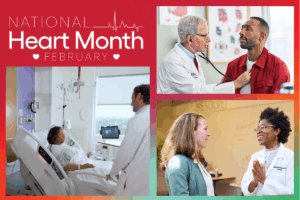
February, a month traditionally associated with love, also brings attention to something equally vital: heart health. Recognized as Heart Health Awareness Month, February is dedicated to raising awareness about cardiovascular diseases (CVD), which continue to be the leading cause of death worldwide. Join us in highlighting the importance of heart health and taking steps to prevent CVD.
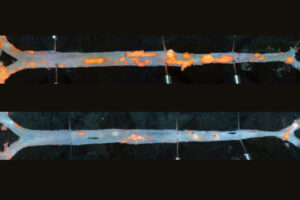
Scientists have designed an immunotherapy that reduces plaque in the arteries of mice, presenting a possible new treatment strategy against heart disease. The antibody-based therapy could complement traditional methods of managing coronary artery disease that focus on lowering cholesterol through diet or medications such as statins, according to the findings of a new study led by researchers at the Lavine Lab at Washington University School of Medicine in St. Louis.
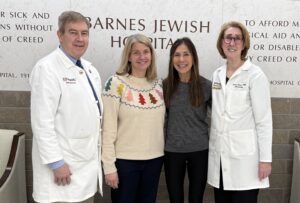
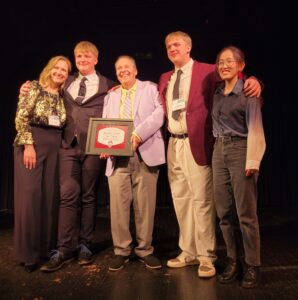
Layne Helmering and her family lost their son Nicholas last year to hypertrophic cardiomyopathy. A high school senior and captain of his debate team, Nicholas passed away suddenly in his sleep. In the wake of this tragic loss, Nicholas’s debate team held a fundraiser, coming together to raise awareness of HCM, a disease of the heart muscle that makes it harder for the heart to pump blood to the rest of the body.

Mass General Brigham researchers and collaborators from Washington University School of Medicine in St. Louis and Emory University’s Rollins School of Public Health pooled data from 99 countries and 810,635 adults to determine how many people worldwide may benefit from GLP-1 use. They found more than one in four adults would be eligible for GLP-1s for weight management, with women, older individuals, and low- and middle-income countries among the most eligible. These critical metrics could be formative in policy development to deploy GLP-1s around the world to tackle obesity and its comorbidities. Their results are published in a research letter in The Lancet Diabetes & Endocrinology.

When Marcy Lagarde, 42, of Raymore, Missouri, felt sudden excruciating pain in her left arm and had trouble lying down she
Headshot of 42-year-old Marcy Lagarde wearing sunglasses and white sleeveless top.
BJC patient, Marcy Lagarde, 42
knew something wasn’t right. Marcy has Marfan syndrome, a genetic condition that weakens the body’s connective tissue. Because she has been under the care of Alan Braverman, MD, a WashU Medicine cardiologist at Barnes-Jewish Hospital and world-leading expert in Marfan syndrome, she knew that the condition put her at an increased risk for cardiovascular issues—but she never expected to face one so suddenly.
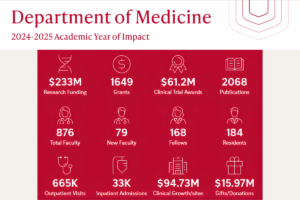
As we begin the new year, I am filled with gratitude for the enormous contributions our faculty, staff and trainees have made, providing outstanding care for patients, performing groundbreaking research and delivering exceptional educational programs. This has not been an easy year. We have dealt with many challenges including a tornado that impacted many in our community, policy changes negatively impacting research funding and healthcare, budget restrictions and threats to our cherished values of diversity, equity and inclusive excellence.

At 82 years old, Lois Miles was one of the first patients at Barnes-Jewish Hospital to receive a transcatheter tricuspid valve implant, a groundbreaking procedure performed in 2024. It’s one more way the hospital and its academic physician partner, WashU Medicine, are helping patients with valve disease.
For years, Lois’ leaky tricuspid valve caused blood to flow backward in her heart. She also had atrial fibrillation, a condition that caused her heart to beat too fast, adding even more complexity to her case. She often felt short of breath, became full quickly when eating, and just didn’t feel right.
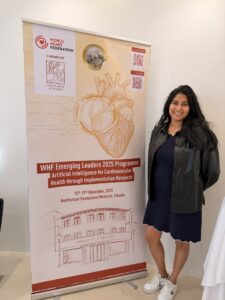
Third-Year Cardiovascular Fellow Aishwarya Vijay, MD, was chosen to participate in the 2025 World Heart Federation Salim Yusuf Emerging Leaders Cohort. Applicants to this program represented 25 countries across 5 continents. The program was held in November in Florence, Italy.

TCTMD spoke with Thomas Maddox, MD (Washington University School of Medicine, St. Louis, MO), who serves on the US Food and Drug Administration’s digital health advisory committee, to get his thoughts on the biggest AI-related news from the past year and what the field can expect moving forward.

“The tower represents the newest chapter in the covenant between our institutions and the people we serve,” said David H. Perlmutter, MD, executive vice chancellor for medical affairs, the Spencer T. and Ann W. Olin Distinguished Professor and the George and Carol Bauer Dean of WashU Medicine. “For years, Barnes-Jewish Hospital has been recognized as one of the nation’s leading hospitals and a vital safety net provider.


Nancy Sweitzer, MD, PhD, Director of Clinical Research for the Division of Cardiology and Vice Chair of Clinical Research for the Department of Medicine was named in a recent article by Becker’s ASC Review as one of 5 Cardiology Leaders to Watch in 2025.

When Ashley Brooks, RN, BSN, was born, the first hint her parents received that something was out of the ordinary was that nurses didn’t bring their infant daughter from the nursery to their room when it was time to eat. She had been taken to the hospital’s neonatal intensive care unit.
Something was different about Ashley’s heart, but physicians didn’t quite know what. Answers finally came when Ashley was 4 and doctors diagnosed her with restrictive cardiomyopathy, a heart condition in which the heart muscle is too stiff to pump blood properly. Ashley’s childhood, however, was pretty normal—until she turned 18. That year, while she was a senior in high school, she had a stroke, and her doctors decided it was time for her to get on the wait list for a heart transplant. Over the course of two years, her condition worsened, and in 2005, when she was 20, Ashley got the call. There was a heart ready for her.


Sumanth Prabu, MD, Lewin Distinguished Professor of Cardiovascular Diseases and Chief of the WashU Cardiovascular Division, co-authored the 2025 scientific statement published by the American College of Cardiology on the role of inflammation in cardiovascular disease. The new statement reviews residual inflammatory risk, screening & management, and new anti-inflammatory strategies.
Mark Huffman, MD, MPH, William Bowen Endowed Professor of Medicine in the Cardiovascular Division and Co-Director of the WashU Global Health Center, will be a featured presenter at the South Asia Forum for Clinical Development in Colombo, Sri Lanka. This year will be the fourth for the SAF, and programming will focus on non-communicable cardiovascular, […]


The Academy of Educators at WashU Medicine is an institutional collaboration dedicated to fostering a culture of educational excellence and an institutionally valued community of leaders in health science education.

Zainab Mahmoud, M.D., M.Sc., an assistant professor of medicine at Washington University School of Medicine in St. Louis will receive the inaugural Jack Sarver Prize in Clinical Science and Jack Sarver Prize in Basic Science, respectively, at the American Heart Association’ Scientific Sessions 2025. The meeting, to be held Nov. 7-10, 2025, in New Orleans, is a premier global exchange of the latest scientific advancements, research and evidence-based clinical practice updates in cardiovascular science. The awards will be presented during dinner events of the Council on Clinical Cardiology and the Council on Basic Cardiovascular Sciences on Saturday, November 8, 2025.

A new paper in JACC: Advances delves into the factors that may affect implementation of a polypill for heart failure with reduced ejection fraction (HFrEF)—assuming one proves safe and effective—and outlines strategies for an eventual rollout.
This exercise “just reinforces the idea, in addition to previous data showing therapeutic inertia and reluctance to use other single-pill combination therapies for cardiovascular diseases, that we need to plan in advance. We need to be strategic in how we design the heart failure polypill and how we implement it, and what strategies and what messages we provide with that,” said Justin Chen, MD (WashU Medicine, St. Louis, MO), one of the lead authors.

Megan Hangyal, an ultrasound sonographer who works at the Center for Advanced Medicine in South County, was celebrating with family and friends at Arnold Days when the crowd around her began to panic. As some fellow attendees asked if medical professionals were present, Megan snapped into action.

The team in the Cardiac Diagnostic Lab, located on the Barnes-Jewish campus, have won a 2025 QUEST (Quality, Excellence and Safety Team) award. This BJH award recognizes contributions made to improve organization performance and quality of care through the use of process and outcome measures. The CDL submission, CDL Echo Capacity and Workflow Optimization, also reflected goals of the BJC Heart & Vascular Growth Initiative.

Phillip S. Cuculich, MD, Professor of Medicine in the Cardiovascular Division and his fellow Co-Director of the Center for Noninvasive Cardiac Radioablation, Clifford Robinson, MD presented the keynote address at the Presidential Symposium of the 2025 American Society for Radiation Oncology Conference.

From the earliest understanding of the body’s circulatory system to today’s groundbreaking treatments, the practice of heart and vascular medicine has continuously evolved in the search for new and better ways to protect and preserve the heart’s essential functions. Specialists at the Washington University and Barnes-Jewish Heart & Vascular Center are at the vanguard of this evolution, discovering new treatments and advancing compassionate care.
Doxorubicin has been a mainstay in cancer treatment for more than 50 years. Sometimes called “red devil chemo,” it is potent and effective against many cancer types. But it comes with a major downside — increased risk of severe heart failure, even decades after successful cancer treatment.Now researchers led by WashU Medicine cardiologist Ali Javaheri, MD, PhD, have identified a type of immunotherapy that prevents and treats the heart muscle damage caused by doxorubicin, based on their findings in human heart tissue, cell lines and mouse models of heart failure. The study appears in the journal Circulation.
“These medications are saving lives,” said Anubha Agarwal, MD, assistant professor of medicine of cardiology and co-director of the program in global cardiovascular health at WashU Medicine in St. Louis. “There is not a financial incentive to produce them, which is an issue in high-income countries like the US and the UK.”
Mark Huffman, MD, MPH served on roadmap committee, co-authored report for World Heart Federation. This WHF Roadmap outlines the scientific and clinical evidence to support the scale up of SPCs globally, before exploring some of the barriers that exist to their advancement. Among the major challenges are – limited manufacturing; the high cost of SPCs to both governments and patients; inconsistent international and national guidelines; and prescriber caution.

Justin S. Sadhu, MD, MPHS, FACC, Professor of Medicine in the Cardiovascular Division, joined the Department of Medicine in 2015. Dr. Sadhu completed his undergraduate degree at the University of Illinois in Chicago, where he graduated with Highest Distinction in Biochemistry; Mathematics and Computer Science minor. He attended medical school at Washington University School of Medicine as a Distinguished Student Scholar, graduating in 2007 as a member of Alpha Omega Alpha. Dr. Sadhu completed internal medicine residency, cardiology fellowship, and a Master degree in Population Health Sciences at WashU/BJH

The Cardiovascular Division recently participated in the US Department of Labor’s Clinical Research Professional Apprenticeship Program and graduated one of the program’s first apprentices, Kesha Hanks. Kesha worked in the Cardiology Clinical Research Group as a Clinical Research Apprentice. After completion of the program, Kesha has now been promoted to a Clinical Research Coordinator 1. This […]

Traditional models of cardiovascular care are facing mounting pressure from a range of macroeconomic, demographic and technological forces, according to Karen Joynt Maddox, MD, MPH, co-director of the Center for Advancing Health Policy and Economics Research and associate professor of medicine at the Washington University School of Medicine in St. Louis.

The Cardiovascular Division is proud to announce that 34 of our faculty have been selected for the 2025 Castle Connolly Top Doctors® list. The Top Doctors® selection process is entirely merit-based. Doctors cannot pay to be listed. These doctors are best-in-class healthcare providers, embodying excellence in clinical care as well as interpersonal skills.

Dr. Walter Schiffer joined the Department of Medicine in the Cardiovascular Division as an Assistant Professor in August 2025. He specializes in cardio-oncology and cardiac critical care, with a focus on improving cardiovascular outcomes in patients with cancer and those requiring intensive cardiac support. His clinical and research interests center on better identifying and managing cardiovascular complications in oncology patients, optimizing heart failure treatment strategies, and refining critical care protocols for patients in cardiogenic shock.

Cardiology and Heart & Vascular Surgery are ranked as High Performing in AAA Repair, Heart Attack, Aortic Valve Surgery, Heart Bypass Surgery, Heart Failure, Heart Arrhythmia, and Pacemaker Implantation. Of the 18 High Performing areas for BJH, 7 were in Cardiology, and Heart and Vascular Surgery.

Professor of Medicine and Co-Director of the WashU Center for Advancing Health Services, Policy & Economics Research Karen Joynt Maddox, MD, MPH has accepted two new roles with the American Heart Association as of July 1st.
Nancy Sweitzer, MD, PhD, vice chair of clinical research for the department of medicine, director of clinical research for the division of cardiology and director of translational workforce development at the Washington University School of Medicine in St. Louis, will serve as treasurer from 2025-2027.

Cardiologist receives Harrington Discovery Institute award to support the development of breakthrough treatments for heart disease